
 Written by
 Procurement teams are under constant pressure to reduce costs, improve compliance, accelerate approvals, and provide better visibility into organizational spending. Yet many organizations still rely on emails, spreadsheets, and disconnected systems to manage procurement activities. According to the referenced article, Power Apps provides a low-code approach to centralize procurement workflows, automate approvals, and improve visibility across the procurement lifecycle.
Why Traditional Procurement Processes Struggle
In many organizations, procurement activities are spread across multiple tools and departments. Purchase requests may begin in spreadsheets, approvals move through email chains, and vendor information is maintained in separate systems. This fragmented approach often leads to:
- Delayed approvals
- Lack of process transparency
- Data duplication and manual entry errors
- Limited visibility into procurement status
- Compliance and audit challenges
The article highlights that disconnected systems and manual sign-offs create procurement bottlenecks that become even more significant as organizations grow and scale.
How Power Apps Changes the Procurement Experience
Microsoft Power Apps enables organizations to build tailored procurement applications without extensive custom development. By creating a centralized procurement platform, organizations can manage purchase requests, approvals, vendor information, and procurement tracking from a single interface.
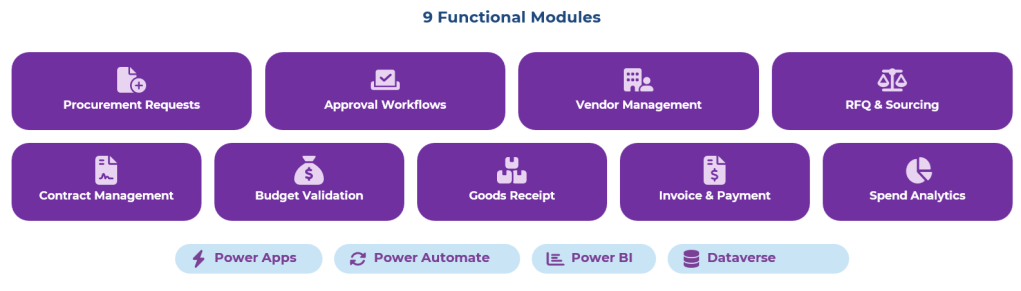
A well architected Power Apps-based procurement solution can include:
1. Digital Purchase Requests
Employees can submit procurement requests through a user-friendly application rather than sending emails or maintaining spreadsheets.
2. Automated Approval Workflows
Using Power Automate alongside Power Apps, requests are automatically routed to the appropriate approvers based on business rules, department, budget thresholds, or procurement category.
3. Vendor Management
Procurement teams can maintain a centralized repository of approved vendors, helping improve consistency and governance.
4. Real-Time Tracking
Stakeholders gain visibility into the status of each procurement request, eliminating the need for manual follow-ups and status inquiries.
5. Compliance and Audit Readiness
Automated workflows provide a clear approval trail and historical records, helping organizations demonstrate compliance during audits.
Key Business Benefits
Faster Procurement Cycles
One of the most significant advantages of procurement automation is the reduction in approval delays. Automated workflows eliminate manual handoffs and help ensure requests reach the right approvers immediately. The article notes that procurement automation can help organizations accelerate order cycles and improve operational efficiency.
Improved Visibility
Decision-makers gain real-time insights into procurement activities. Managers can view outstanding approvals, track spending patterns, and identify process bottlenecks before they impact operations.
Enhanced Compliance
Organizations in highly regulated industries often struggle with maintaining adequate documentation and approval records. Power Apps helps establish standardized processes and creates a transparent audit trail for procurement activities.
Reduced Operational Costs
Manual procurement processes consume valuable employee time and increase the risk of errors. By automating routine activities, teams can focus more on strategic sourcing, vendor negotiations, and value creation.
A Modern Procurement Architecture with Microsoft Power Platform
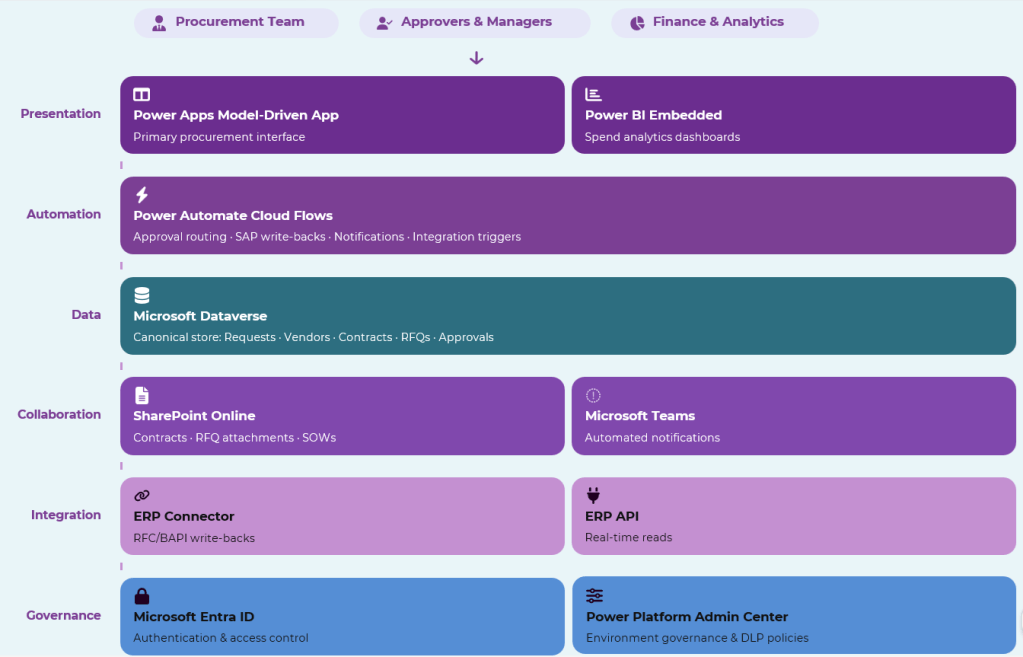
A comprehensive procurement solution can leverage multiple Microsoft technologies:
| Component | Purpose |
| Power Apps | Procurement application and user interface |
| Dataverse | Centralized procurement data repository |
| Power Automate | Workflow automation and approvals |
| Power BI | Procurement analytics and reporting |
| Microsoft Teams | Collaboration and approval notifications |
| SharePoint | Document management and procurement records |
Together, these technologies create a seamless digital procurement ecosystem that improves operational control while maintaining flexibility.
Industry Use Cases
Procurement automation is not limited to any single industry. Organizations can tailor Power Apps solutions for:
- Banking and financial services
- Manufacturing
- Healthcare
- Government and public sector
- Construction
- Retail and distribution
- Oil & Gas
Each organization can configure approval hierarchies, compliance rules, vendor management processes, and reporting capabilities according to its specific requirements.
Why This Matters Now
Modern businesses cannot afford lengthy procurement cycles, limited visibility, or fragmented approval processes. As digital transformation initiatives continue to expand, procurement departments must adopt solutions that balance efficiency, governance, and user experience.
Power Apps offers a practical path forward by enabling organizations to digitize procurement operations incrementally while delivering immediate business value. Rather than replacing entire ERP systems, organizations can extend and modernize procurement workflows using a low-code platform that integrates with existing Microsoft investments.
Conclusion
Procurement is no longer just an administrative function. It is a strategic capability that directly impacts operational efficiency, cost control, and organizational agility. By leveraging Microsoft Power Apps, organizations can transform traditional procurement processes into intelligent, automated workflows that deliver faster approvals, improved compliance, greater transparency, and enhanced decision-making.
For organizations already using Microsoft 365, Dynamics 365, or Power Platform, procurement automation represents an opportunity to unlock significant business value while minimizing development complexity and user adoption challenges.

